Begin with a question you can answer
“Can I make a better muffin?” contains too many possible answers. “Does soaking the oats make this muffin less coarse after cooling?” gives you something observable. Choose one feature you care about: tenderness, height, fruit distribution, crust colour or next-day texture. You do not need a laboratory, but you do need a clear comparison.
Start from a recipe you have baked successfully, or bake an unchanged reference batch first. Save its source, quantities and method. King Arthur Baking and established recipe books can provide useful starting formulas; the important point is to identify the exact recipe rather than combine several from memory. A reference is a baseline, not a promise of perfection.
Change one decision, not the whole system
Replacing flour, reducing sugar and adding extra fruit in the same batch may produce a delicious result, but it will not reveal which change caused it. For an explanatory trial, hold the pan, portion weight, mixing method and oven setup as steady as you reasonably can. Record unavoidable differences rather than pretending they disappeared.
Two smaller batches can be useful, but scaling introduces its own problems. Half an egg should be measured from a beaten whole egg by weight, not guessed from an uneven split. Very small quantities of leavening may exceed a kitchen scale’s precision. When reliable measurement becomes awkward, a full-sized comparison on separate baking days may be more informative.
“Write the question before you taste the answer.”
— The echomuffinwhimnr.forum editorial notebook
A worked idea: should the oats rest?
This is a proposed experiment, not a tested recipe or a claim about community results. Use a familiar oat muffin formula. In the reference batch, follow its usual method. In the comparison batch, combine the oats with the recipe’s milk and let that mixture stand for 20 minutes before continuing. Do not soak the baking powder or baking soda: keep the leavening with the dry ingredients until final mixing.
Use the same oat type and weight. Rolled oats, quick oats and steel-cut oats are not interchangeable experimental materials. Record the milk temperature and the resting time. Because soaking may also change ingredient temperature, bring both mixtures to similar conditions where practical and acknowledge the difference if you cannot.
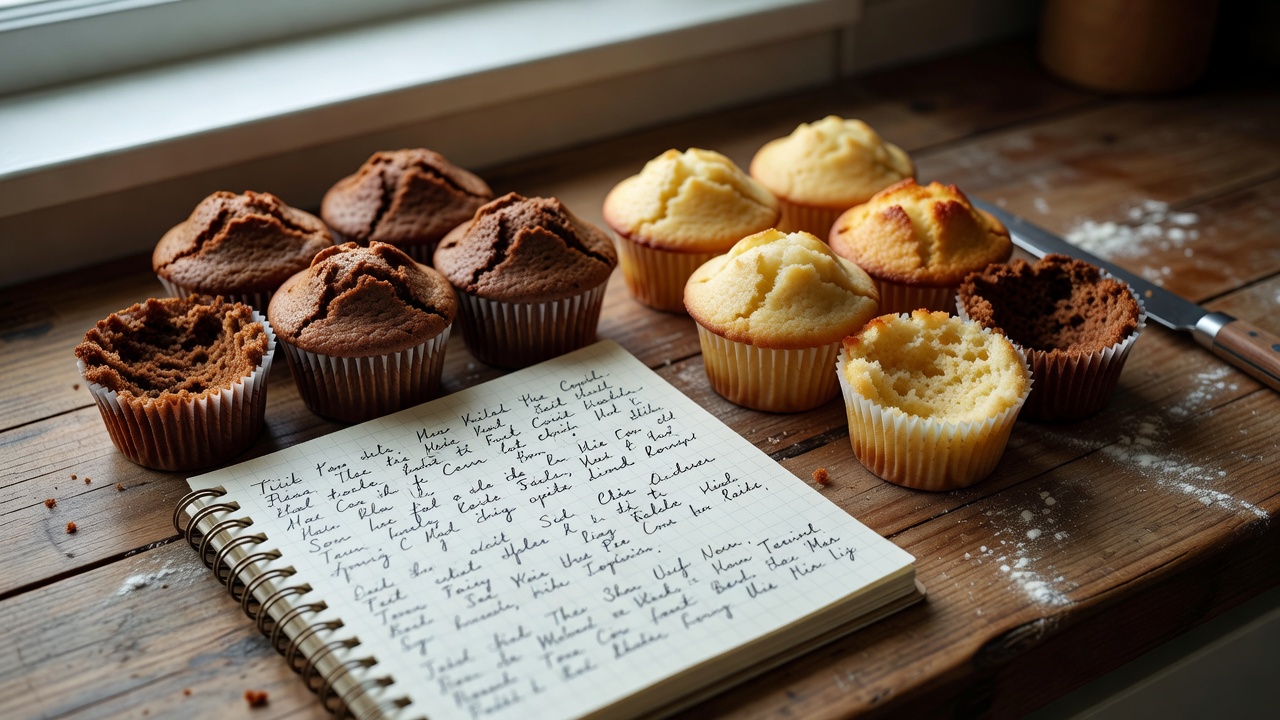
Keep a record another baker could follow
Make notes while mixing, not only after tasting. An unexpectedly thick batter is evidence even if the finished muffins look ordinary. Note the ingredient brands when their composition matters, and distinguish the oven’s setting from any thermometer reading. A domestic oven cycles, so a single reading is not a full temperature history.
- Identify the recipe source and the exact changed quantity.
- Record pan material, cavity size, liners and batter weight per cavity.
- Describe the mixing sequence, any rest and the bake duration.
- Write down the cooling interval before cutting and tasting.
- Photograph the top and cut surface with a batch label nearby.
- Describe storage before making a next-day comparison.
If you ask someone else to taste, label samples neutrally and avoid telling them which one you expect to prefer. This does not create a formal sensory study, but it can reduce the temptation to taste what you hoped would happen.
Make a modest conclusion
“The rested-oat batch seemed softer after one hour” is stronger reporting than “soaking always makes better muffins.” The first statement describes your evidence; the second reaches beyond it. Repeat a promising comparison and consider whether oven position, ingredient temperature or portioning could have influenced the result.
Keep failed experiments too. A collapsed centre, a bland crumb or a tougher second-day texture may narrow the next question. If the changed ingredient itself is the main uncertainty, move to Swap One Ingredient. If the results seem to drift without a recipe change, work through Repeat a Reliable Batch before redesigning the formula.
Prepare a trial note